When learning Russian, you may reach a frustrating point: you know what a word means, but cannot find the words when you try to use it in a sentence.
Verbs are one reason for this.
Knowing a Russian verb’s meaning is only the beginning. Where does the stress fall? How does it conjugate? When do you use the perfective or imperfective? Which cases and prepositions go with it?
These pieces need to come together intuitively before using the verb in a real sentence starts to feel natural.
But Russian verbs are hard to remember.
And even once you remember them, it takes time to reach the point where you can actually use them.
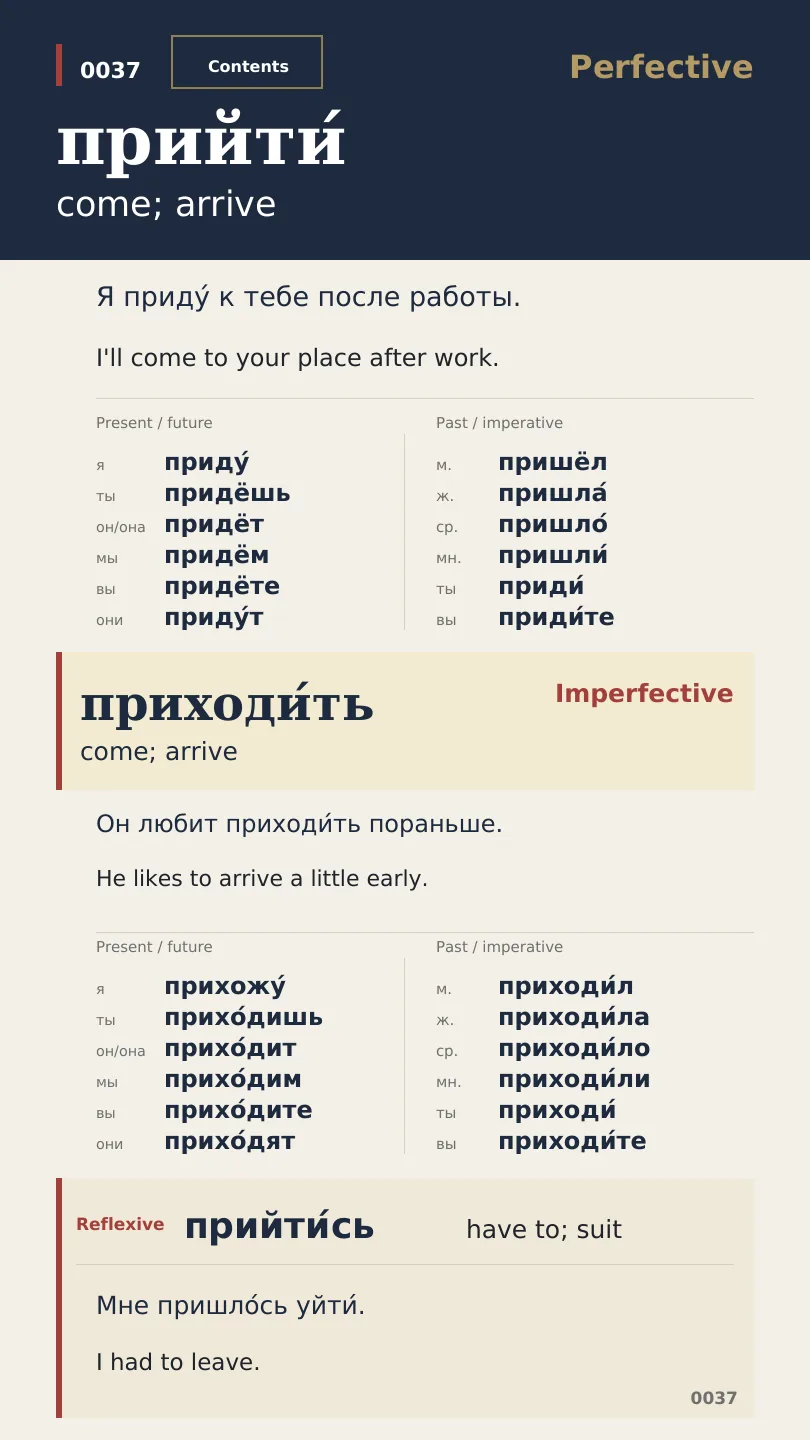
Take приходиться. You may recognise it in a vocabulary list, yet hesitate when making a sentence: when is it used, which words go with it, how does it conjugate, and how do its imperfective and perfective forms relate?
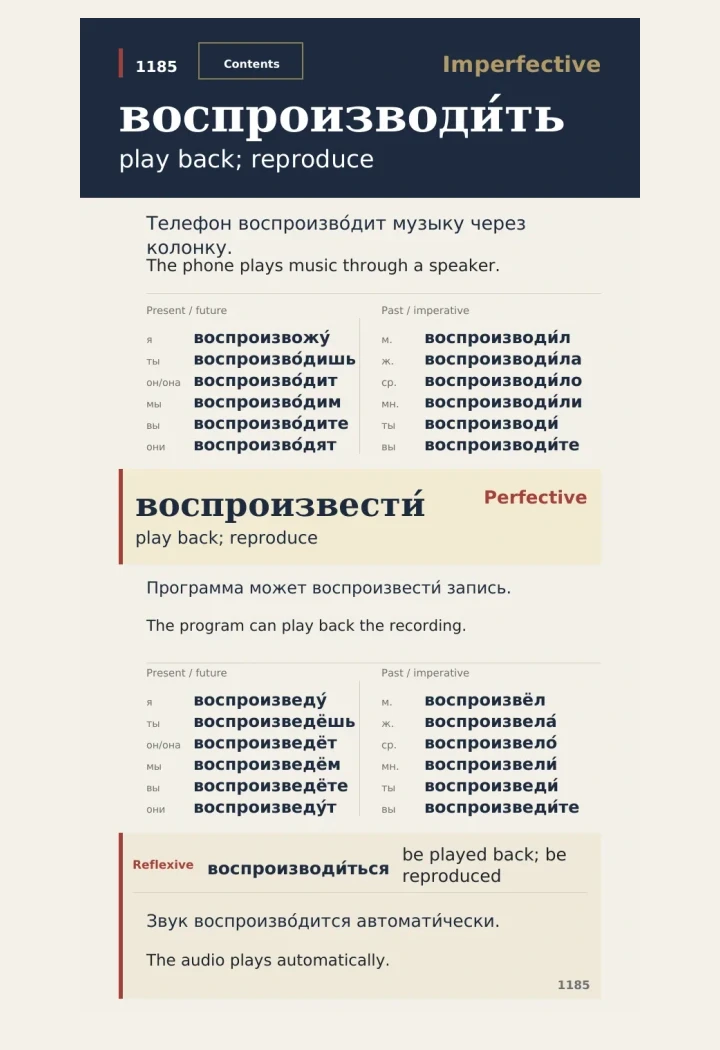
This material lets you work through each verb in four steps.
- Look at the verb
- Check its meaning
- See the context in two example sentences
- Check the conjugations
All four steps fit on one page per verb.

Start with the headword and its meaning, then look directly below to see how it is used in a sentence. Check the present or future, past and imperative forms on that same page.
The verb, meaning, examples and conjugations stay together, so you can revise without switching between a dictionary and conjugation tables.
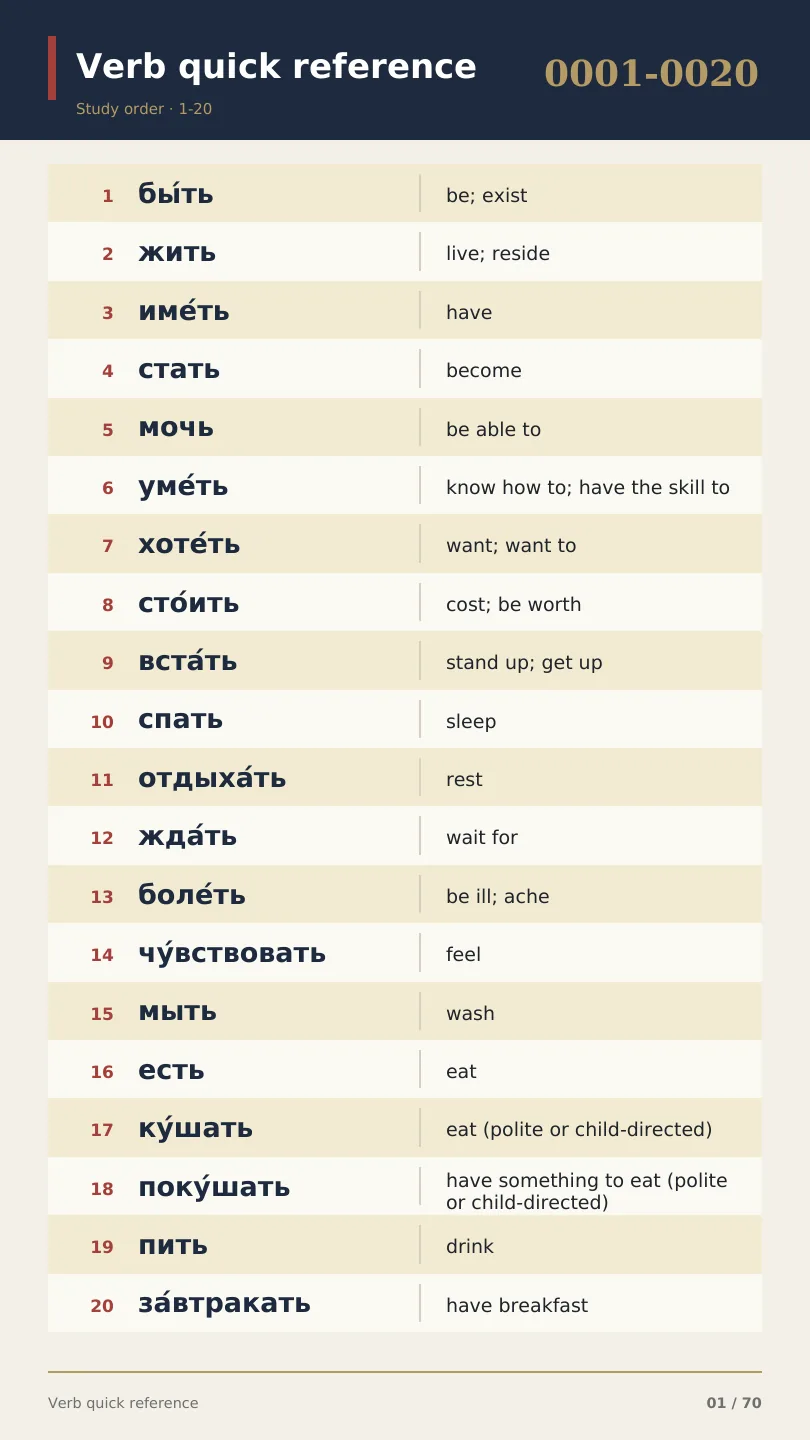
Russian Verb Trainer 1400 is a PDF learning resource focused on verbs, bringing together 1,400 essential verbs with their meanings, stress, aspect, usage, example sentences and conjugations.